for real.
India's brand-only outlet app. Last season's Zara, Nike and Benetton at 60–70% off, for a customer who loves the price and doesn't trust it.



Home, product page, bag. The phones scroll.
In one minute
Brands over-produce: 2.5–5 billion items went unsold in 2023.1 In the US that surplus built TJX, a $56 billion business.6 In India it built an offline chain and no app.
The customer exists: urban, 22–34, brand-aware, sale-trained, living in Zomato, Blinkit, Myntra and Nykaa. But one in five has received a fake online, and fewer than half got their money back.16 At 70% off, a famous logo reads as a scam.
The reframe: at 70% off, the discount isn't the product. Belief is. A first-time buyer must believe three things without touching the garment: it's real, it will fit, and they'll get their money back if not.
Five bets followed: authenticity as a system, fit before feed, honest scarcity, a checkout that speaks Indian, and recourse you can see.
Where clothes go to die
Unsold stock is a quarterly line item for every big brand.
Nike: $9.7 billion of inventory in Sept 2022, up 44%, with a CFO promising to “more aggressively liquidate”.3 H&M: $4.3 billion unsold in 2018.4 Adidas: €1.2 billion of Yeezys.5
In the US, that surplus is an industry. TJX sells brand names “20% to 60% below full-price retailers”: $56.4 billion across 5,085 stores.6 Online, Otrium does it for 400+ brands in Europe.2
India had the offline version, Brand Factory, 100 stores by 2018 and now Reliance's Fashion Factory,7 and no app built for it. Branded off-price lived in sale tabs and grey-market Instagram pages.
A mobile-only outlet where recognised brands clear last season's stock in India at 60–70% off.
The customer
Brand-aware, not brand-loyal. Sale-trained. Used to thirty-minute delivery.
Young and urban. India has 270M+ online shoppers; Gen Z is ~40% of them and spreads spend across five or more apps.9 Half of Myntra's active base is Gen Z.10 Gen Z drives 47% of India's fashion spend and 50% of footwear.13
Trained by the apps next door. Zomato (20.6M monthly customers) and Blinkit (10.2M) set the bar for clarity and speed.11 District made going out playful.12 Nykaa delivers beauty in 30–120 minutes; Myntra in 30.14, 10 None are competitors. All are the bar.
Brand-aware, not loyal. 1.7× more likely to pick a trend over a brand; 8 in 10 ask a friend first.13 The logo is a quality signal, not a religion. That's exactly what an outlet serves.
Sale-trained. Myntra's End of Reason Sale doubles orders.17 The sticker price is a suggestion; the sale is when you buy. Our pitch is a sale that never ends, which is precisely what makes it hard to believe.
What I heard
Three fears, in the same order every time.
Three weeks, lean: 14 interviews, 9 shop-alongs on Myntra and Ajio, a 240-response survey, 11 app teardowns.
“Is it real?” 12 of 14 raised it before I did. One in five Indian shoppers got a fake last year; only 40% got a refund.16 And trust fell as the discount rose: fine at 30%, hesitant at 50%, “what's the catch?” at 70%. Our best number was our biggest objection.
“Will it fit?” 11 of 14. India returns 25–40% of fashion bought online, mostly for size.15 Nobody is “a medium”; they're “a 32 in Levi's, a 30 in Zara”. Forty brands in one feed multiplies that, and with one unit left, you can't order two sizes.
“Will I get my money back?” 9 of 14, and the most emotional. Cash on delivery is trust insurance for a first order.
The quiet one: speed. Overstock ships from brand warehouses, so the honest promise is 7–14 days. We'd say it plainly, early.
“Zara at 70% off? On Instagram that's how you get a fake.”
“I'm a 32 in Levi's and a 30 in Zara. If there's only one left, I don't order.”
“First order on any new app is cash on delivery. Then UPI.”
The reframe
The brief asked for a store. The research asked for something else.
At 70% off, the discount isn't the product. Belief is.
Three beliefs, multiplied: it's real × it will fit × I'll get my money back. Any one at zero and the sale is zero. A badge can't carry that; a system can.
Two more rules. Outlet stock never restocks, so urgency is real, and must never be faked. And the things we can't fix, delivery speed and the age of the stock, get said plainly. Honesty was cheaper than surprise.
Five principles
Prove, don't claim
Every trust element is verifiable or countable.
Fit before feed
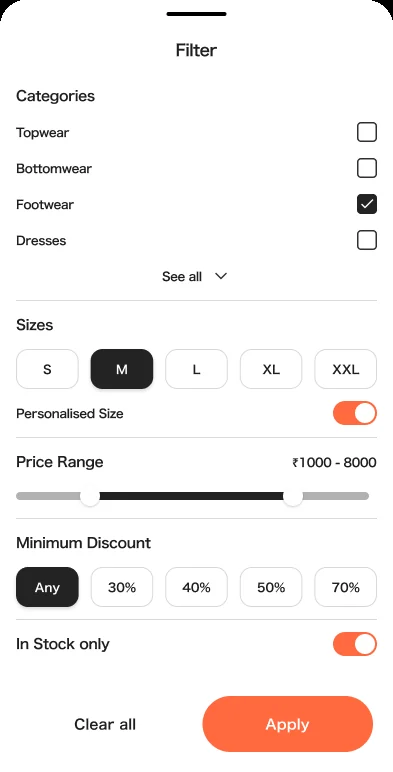
Ask size first. “In my size” is one tap from anywhere.
Scarcity must be true
Real stock, real deal windows. No fake timers, ever.
Recourse is a feature
Windows, refunds and pickups live on the order, not in a policy page.
Speak Indian
OTP, cash on delivery, pincode first, ₹ savings in green, delivery window before pay.
Shape
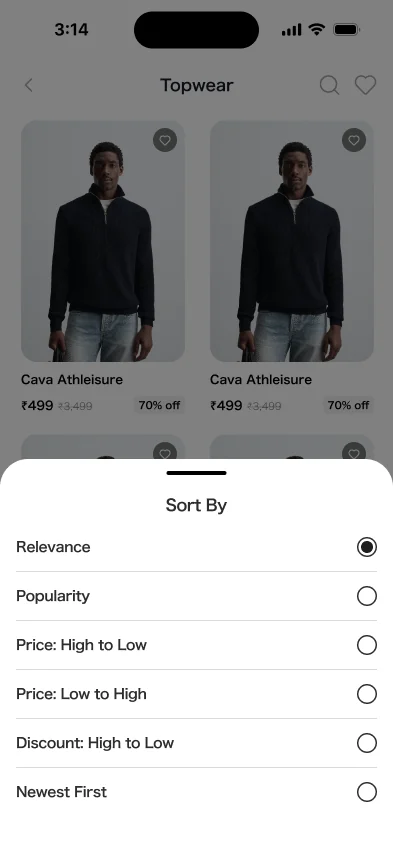
Four places, two modes, one persistent question: what's your size?
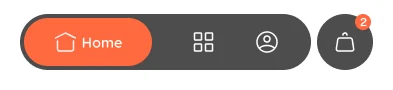
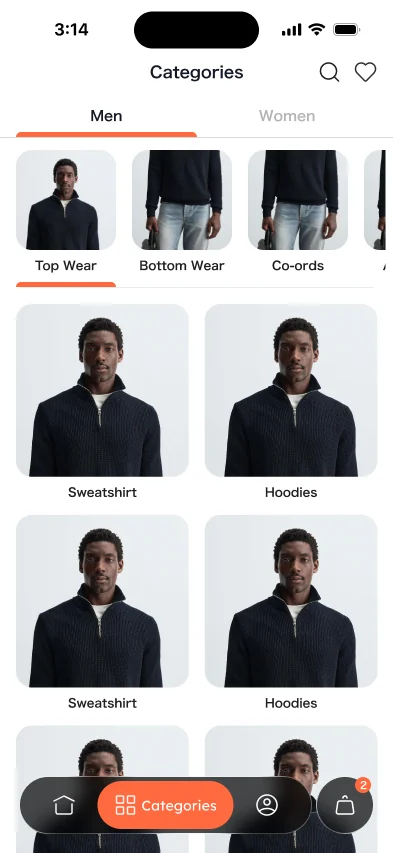
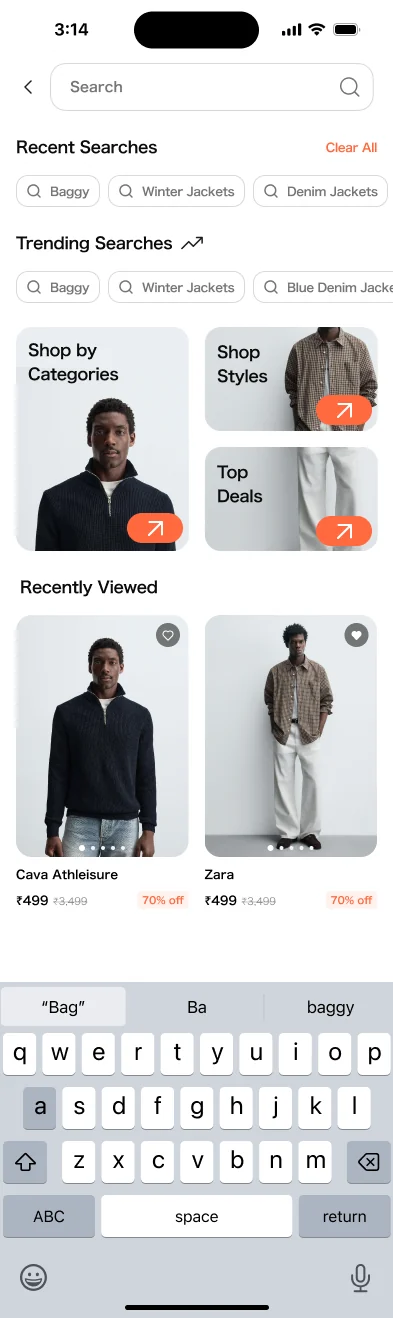
Four tabs, Home, Categories, Account and Bag, in a floating bar that stays through browse-to-buy. Search and Wishlist are header modes, not destinations. Fewer tabs than Myntra, because a few thousand styles don't need five; the bag badge gets the attention instead.
Gender is a context set once and switched at the top of Home. The product page is the belief engine. The bag is one screen. Orders is where recourse lives.
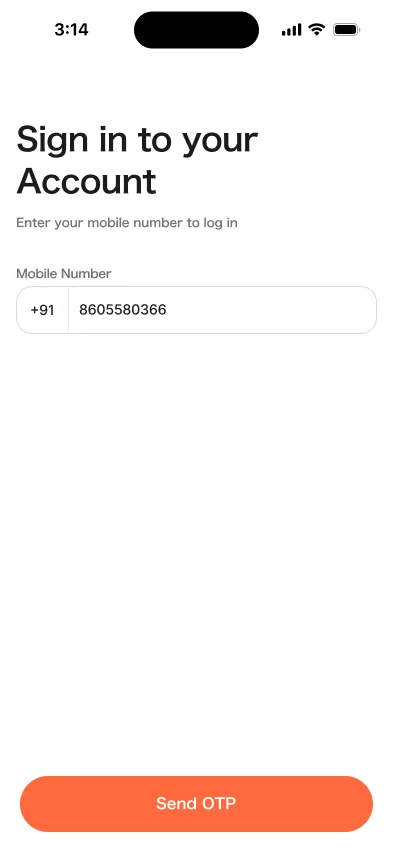
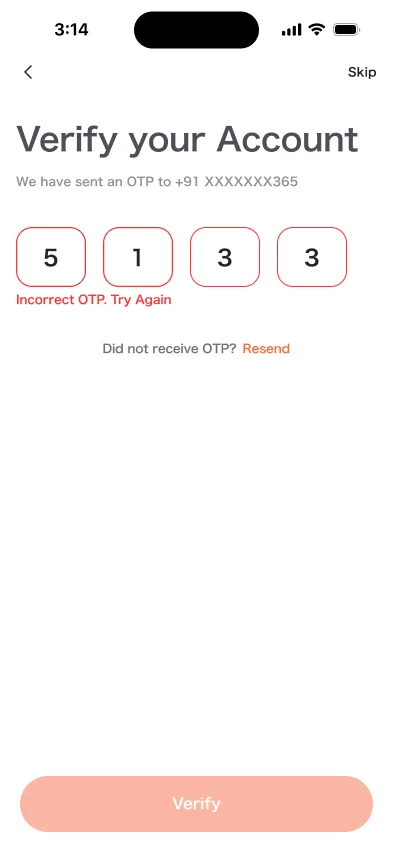
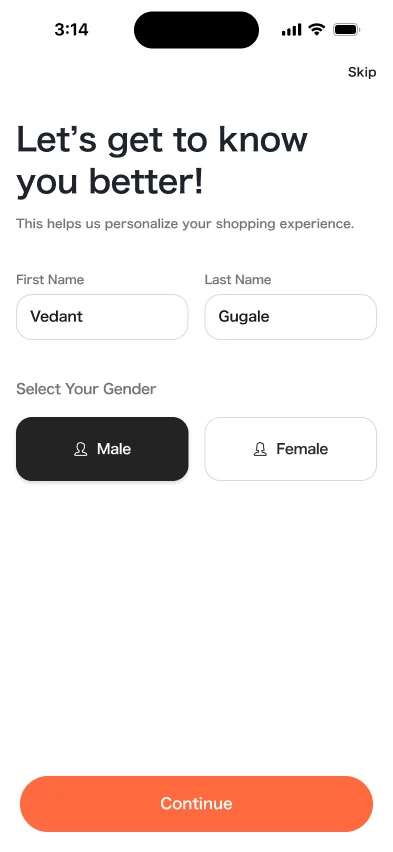
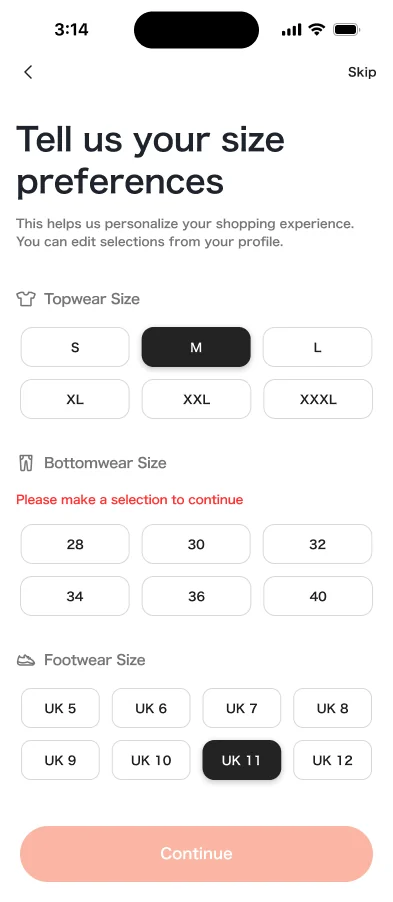
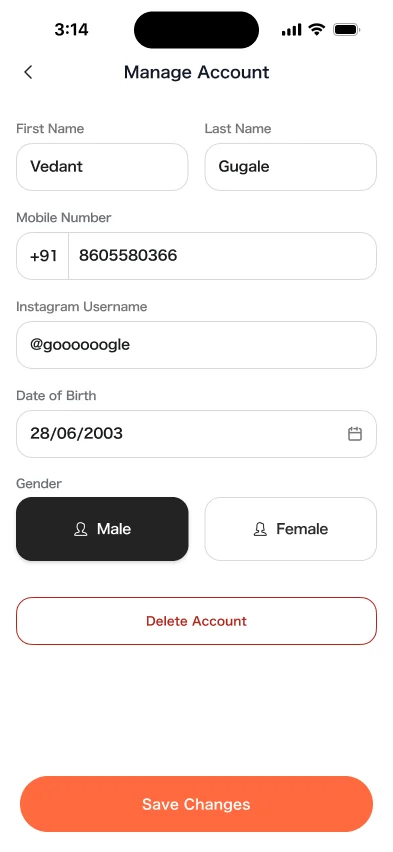
Sign-in is mobile number and OTP. Two skippable steps follow: name and gender, then sizes. The whole app browses without login. The one thing onboarding pushes is size, because size is what makes the feed worth looking at.
On the name. DealStreet shipped as for real: what a customer says when they see Zara at 70% off, turned into the answer. The account menu links to “How for real works”; the certificate carries the wordmark. The name is the promise.
Bet one: authenticity as a system
A badge is a claim. We built a chain of proof, and a loop that strengthens with every delivery.
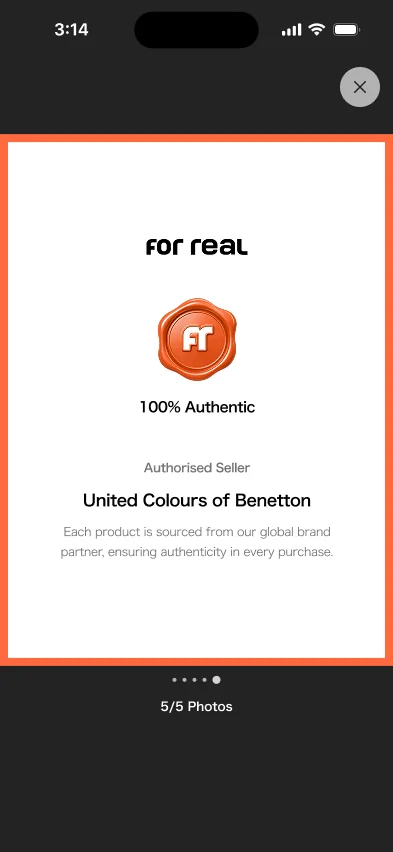
Every competitor uses a shield icon and the word “Authentic”. Research said that stopped working. So: a chain, each link answering a different version of the question.
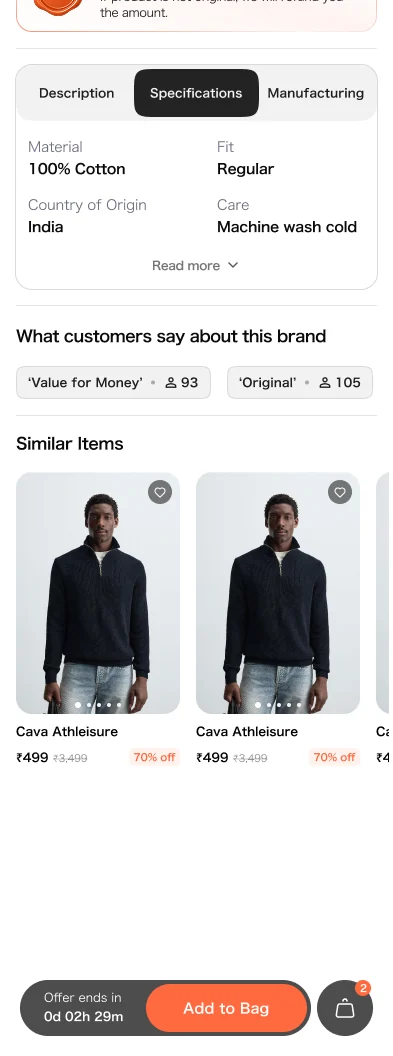
Before you buy. A brand tick with a rating count. A trust row under the price. Our Promise: “If product is not original, we will refund you the amount.” A guarantee with money behind it.
While you look. The certificate is photo 5 of 5 in the carousel. The first version was a tab; nobody opened it. Moved into the swipe, five of six testers found it unprompted.
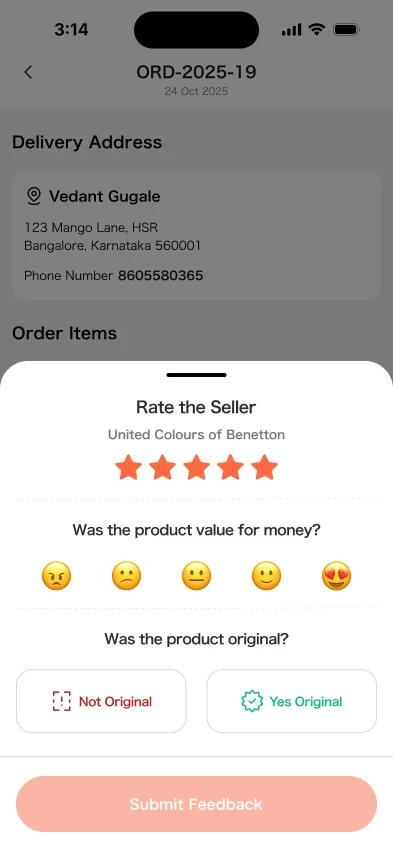
After delivery. Rating asks one binary question, was the product original?, so it can be counted, and the count shows on every product from that brand: “‘Original’ · 105”. Not our word. Other buyers'.
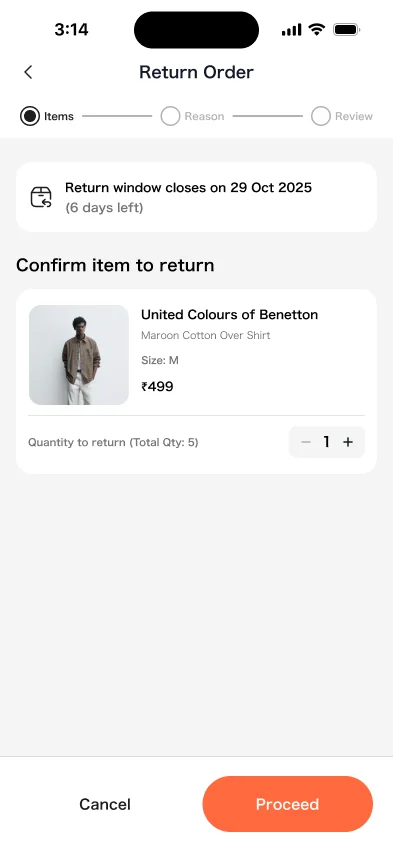
If it goes wrong. “Product is fake” is a first-class return reason. Listing it is a promise we expect to be held to.
 1
2
3
4
5
- Brand tick and count “Zara ✓ · 4.5 (by 1.2k)”. A rating without a denominator is decoration.
- Price, discount chip, struck MRP The MRP is a brand fact. Same chip in grid, bag and receipt.
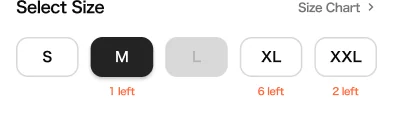
- Live stock per size “1 left · 6 left · 2 left”. Sold-out sizes disabled, not hidden.
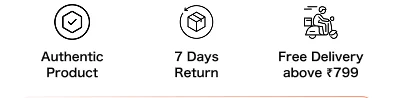
- The contract in six words Authentic Product · 7 Days Return · Free Delivery above ₹799.
- Our Promise Refund if not original. Placed where the eye lands after the price.
Bet two: fit before feed
Forty brands, forty ideas of “medium”, stock you can't order twice.
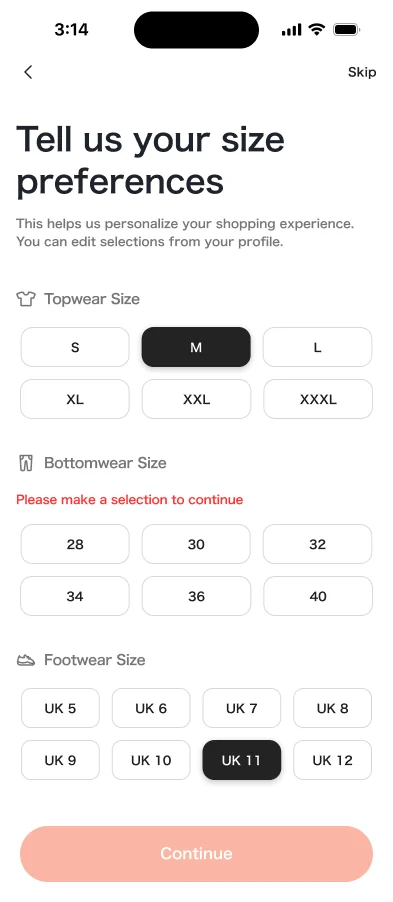
Ask once, by garment. Onboarding takes topwear, bottomwear and footwear sizes, which is how people actually know their bodies. Skippable, editable from Account.
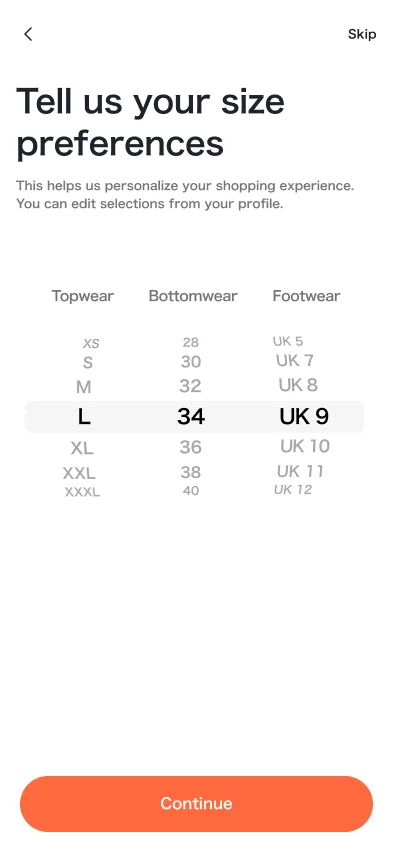
The exploration that failed. Version one was a three-column wheel picker. Compact, elegant; three of five testers set the wrong shoe size. The chip grid that replaced it is less clever and unambiguous. It taught the team early: this customer won't pay a learning-curve tax.
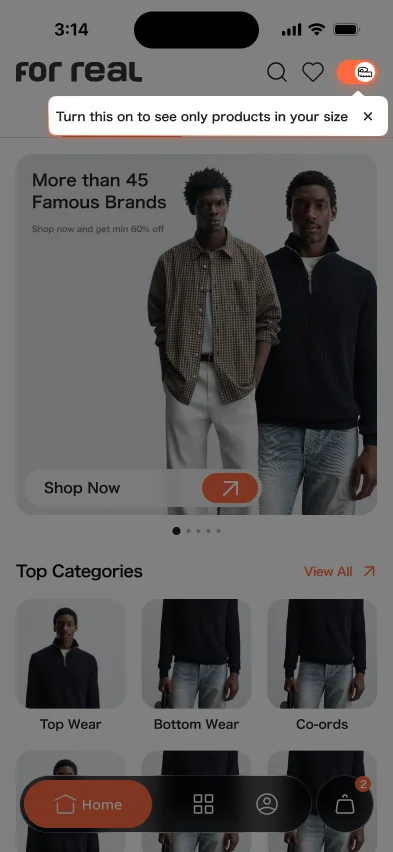
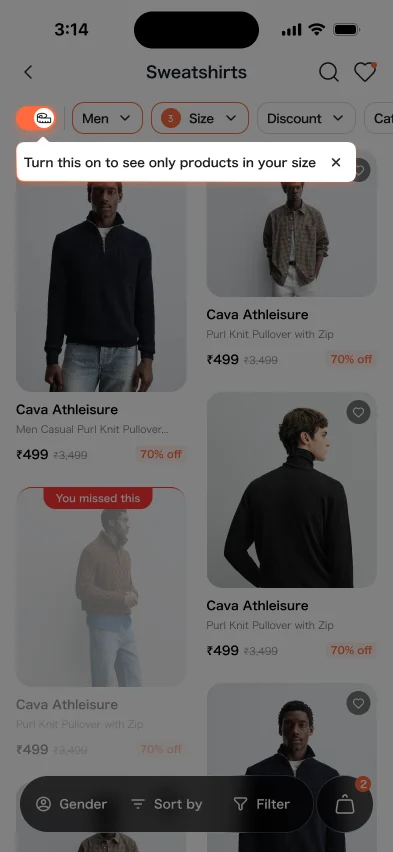
One tap, everywhere. An “in my size” toggle in every header filters the whole feed. Nobody guessed the icon, so a first-run tooltip says what it does.
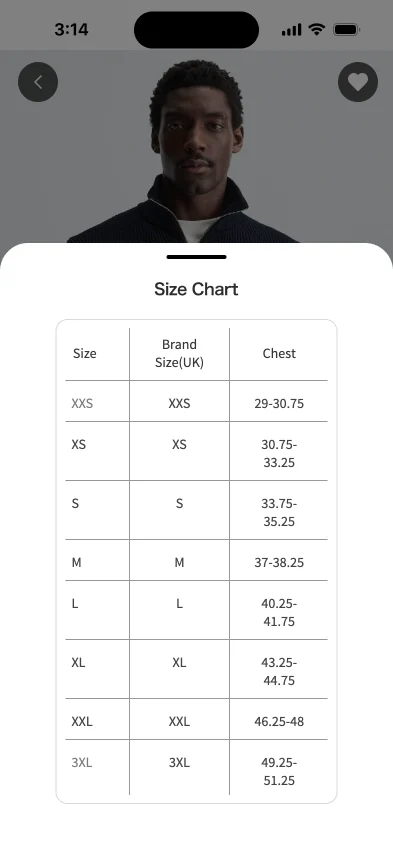
Brand size, translated. The size chart maps the brand's label to a chest or waist measurement. It's the only way to compare a Zara M to a Benetton M. Stock per size sits under the chips, so it never sends you to a size that's gone.
Bet three: honest scarcity
Overstock doesn't restock. Said plainly, that sells.
Indian e-commerce runs on fake urgency, and customers have learned to ignore it. Our stock is genuinely finite. The rule the founders signed: every urgency signal comes from live data. Stock from inventory, countdowns from real deal windows, nothing generated.
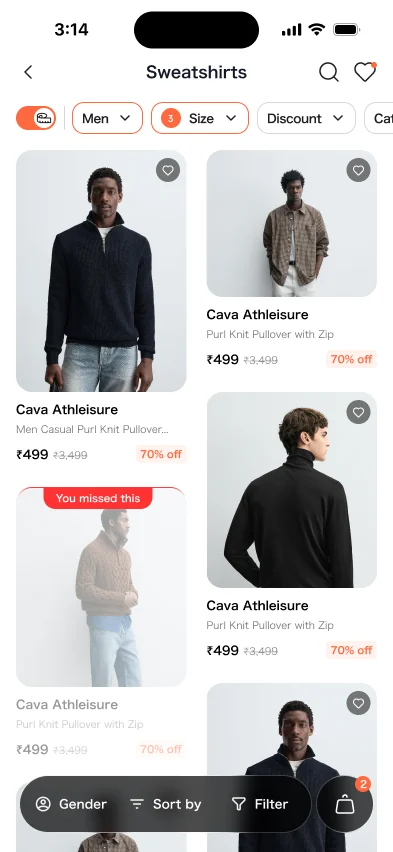
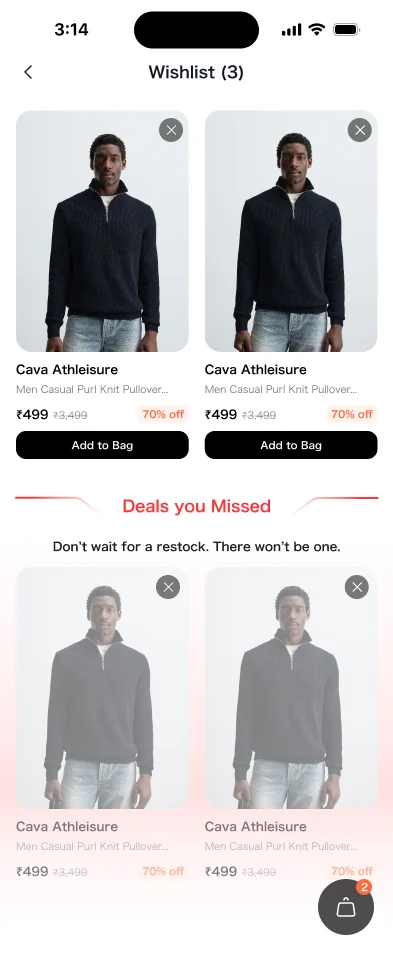
Show what you missed. Sold-out items stay in the grid, dimmed, labelled “You missed this”. In testing that did more for urgency than any timer: “okay, these actually go.” The wishlist has a “Deals you missed” section with one line: “Don't wait for a restock. There won't be one.” The most screenshotted sentence in testing.
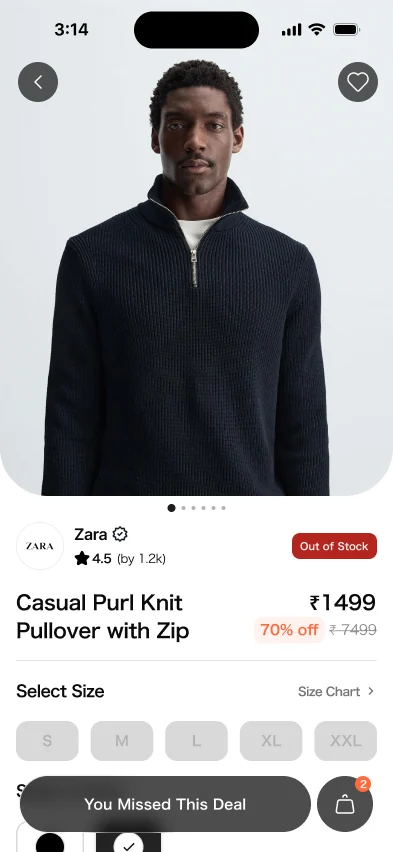
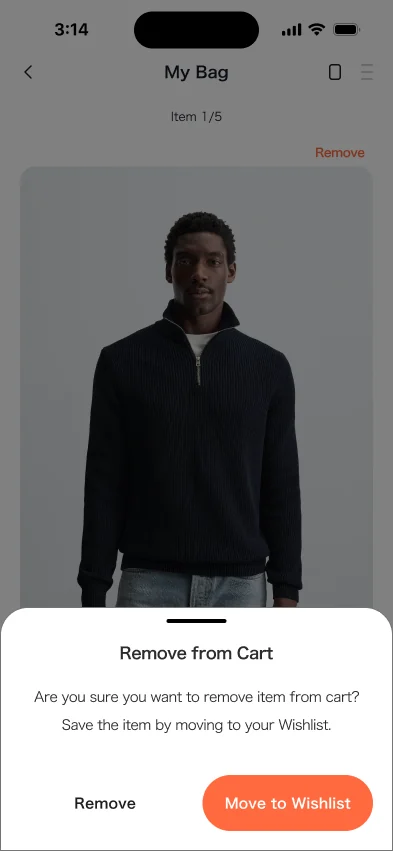
Where the line is. Removing from bag offers “Move to Wishlist” first. The countdown only appears on real deal windows. When a product sells out, the bar says “You Missed This Deal”. No “notify me”, because nothing is coming.
 1
2
3
- Stock under the size The question is never “how many left?” It's “how many in mine?”
- Sold-out sizes disabled, not hidden Shows the range, ends the refresh loop.
- Colour as a variant Colours with no stock in your size drop out of the row.
Bet four: a checkout that speaks Indian
OTP, cash on delivery, and the delivery window before the pay button.
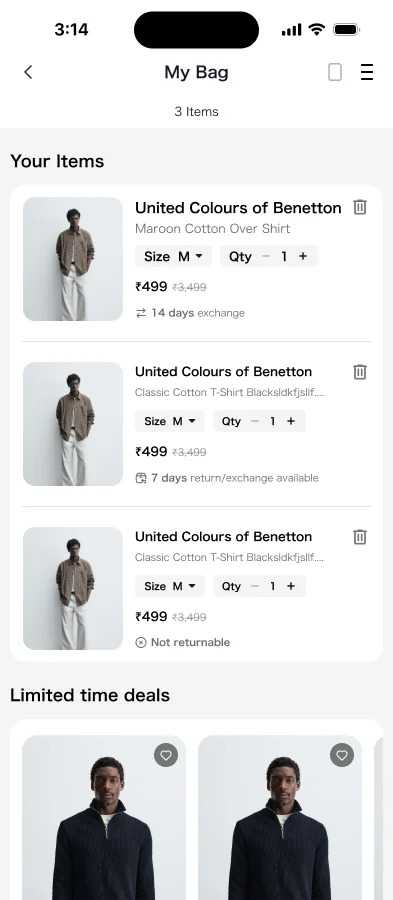
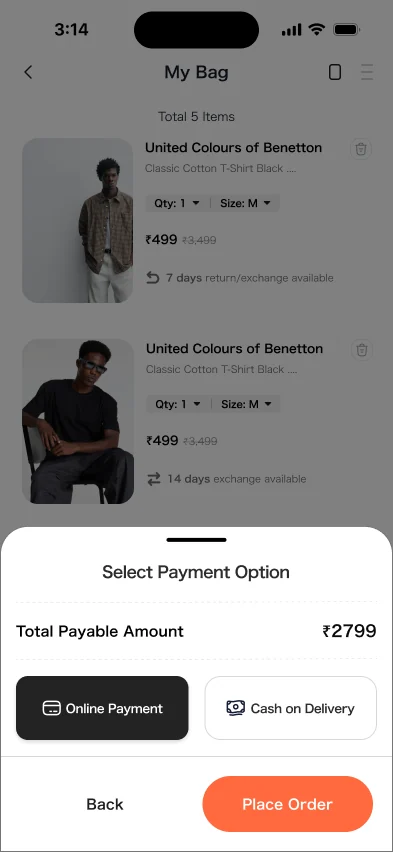
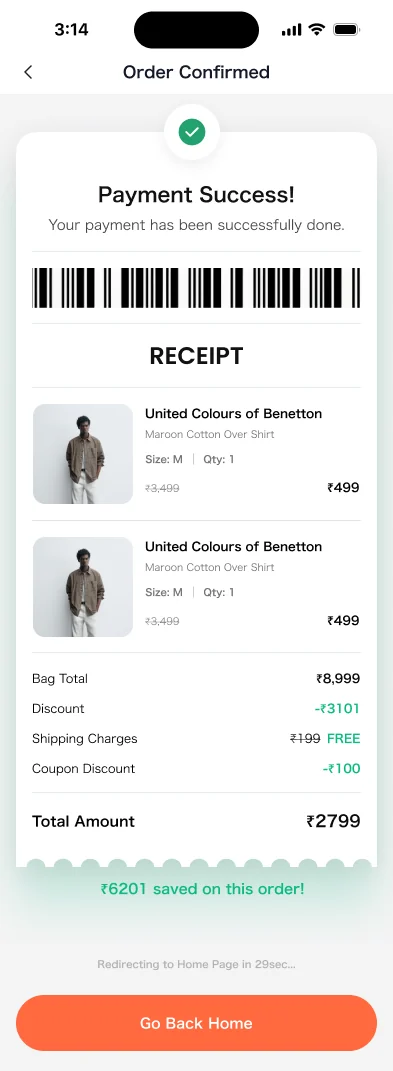
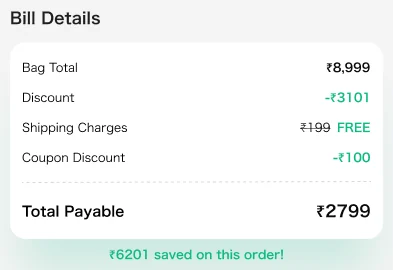
The bag tells you what you can return. Outlet stock has mixed policies, so each item carries its own badge: “14 days exchange”, “7 days return”, “Not returnable”. Four of six testers had asked “can I return this?” in the bag. Afterwards, none.
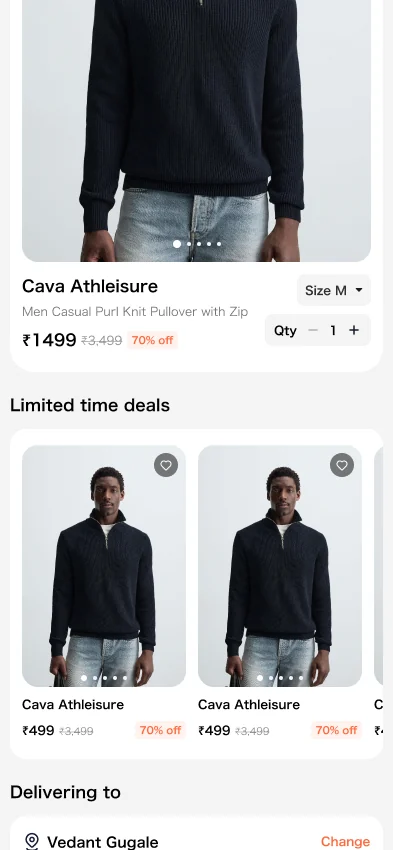
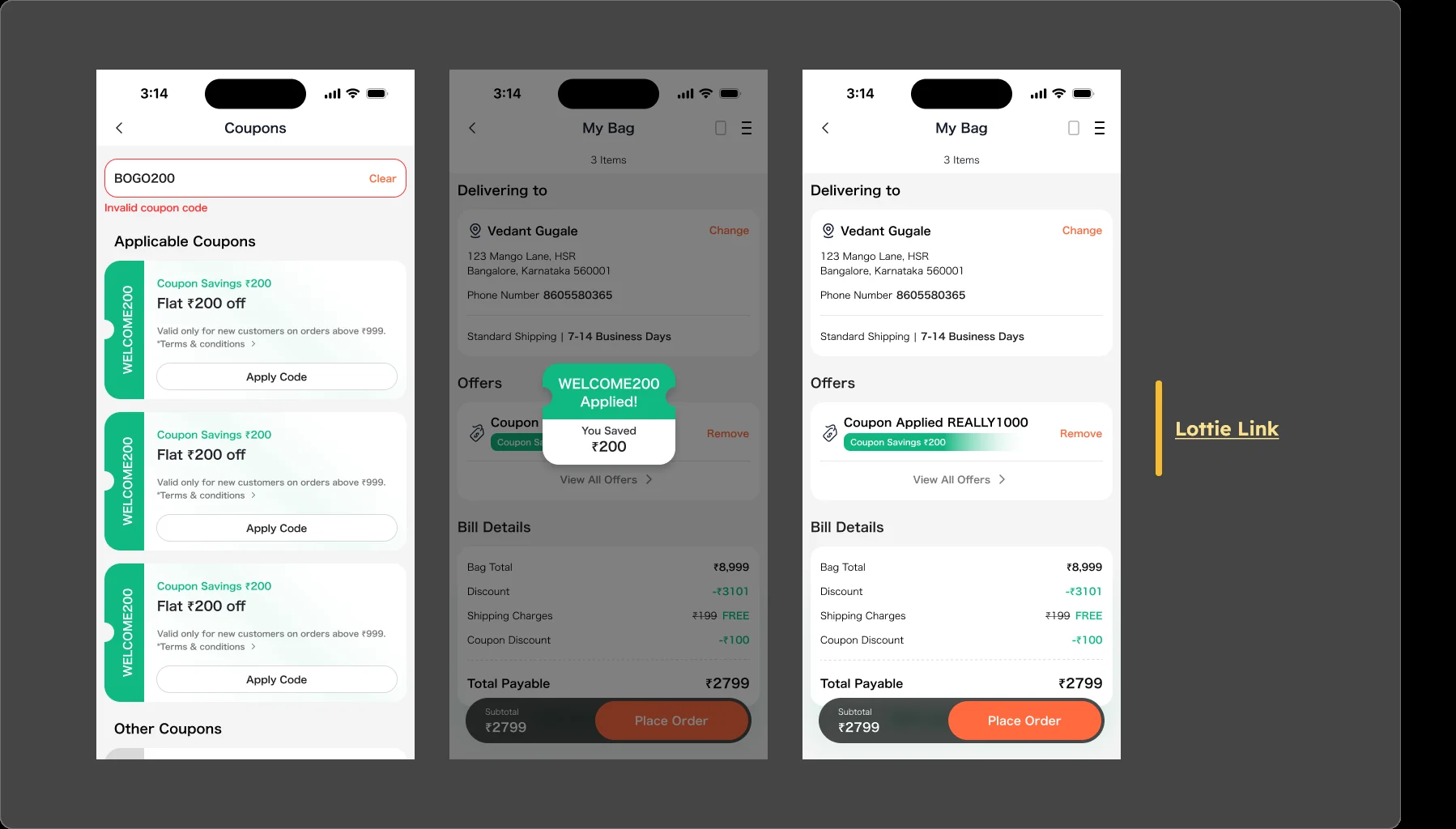
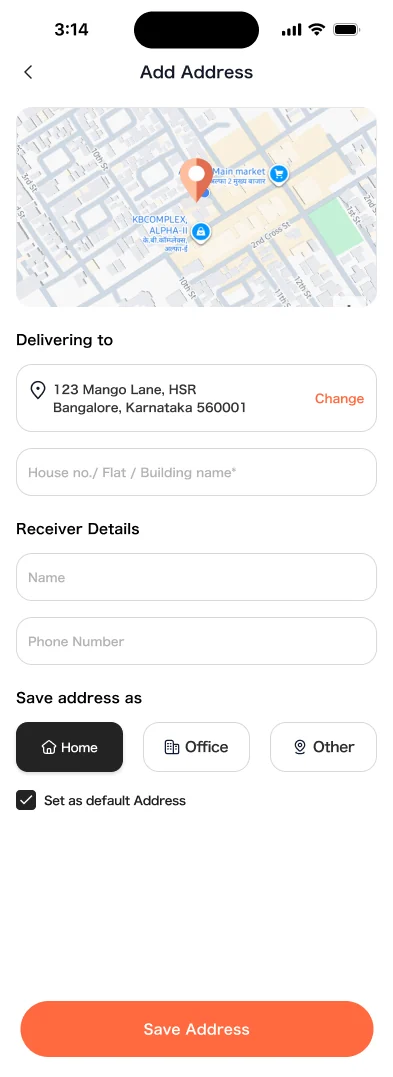
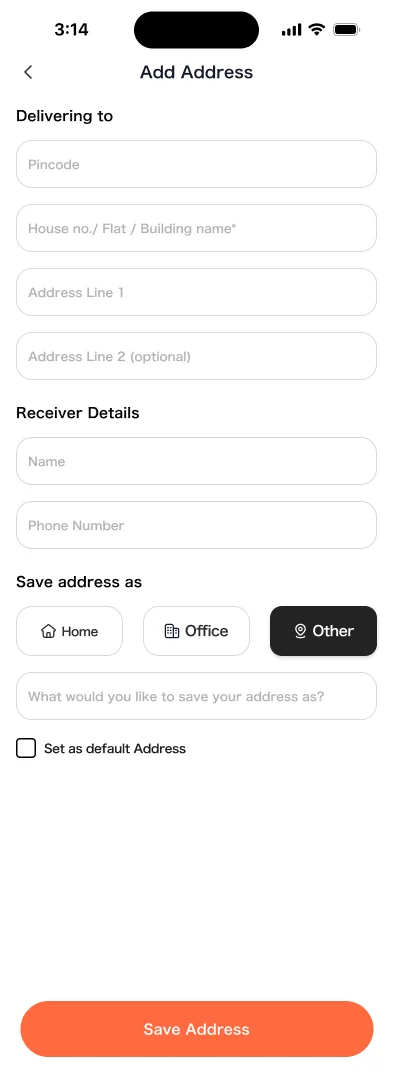
The window before the button. “Standard Shipping | 7–14 Business Days” sits under the address, above the bill. It costs some orders. Discovering it on the confirmation screen costs trust, which is worse.
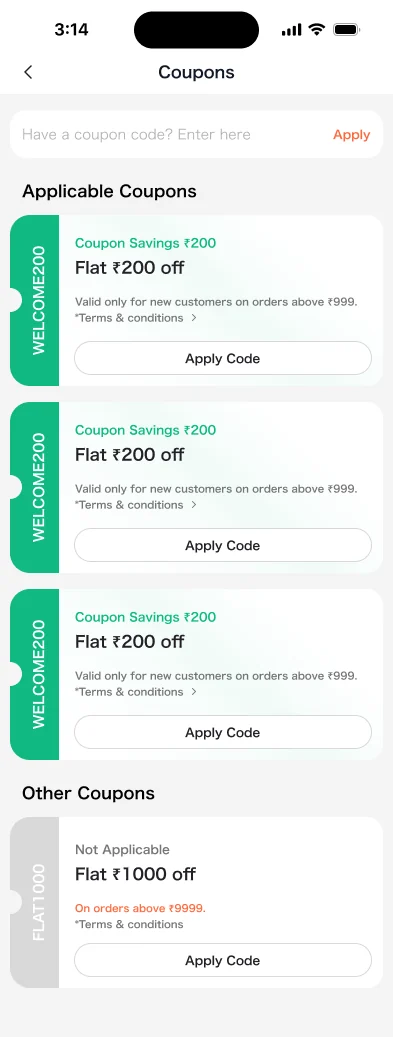
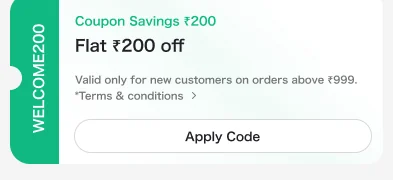
A coupon moment. Ticket-shaped coupons, a small celebration on apply, and “₹6,201 saved on this order” in green under the total. For this customer the saving is the headline.
Cash on delivery stays. The founders would have dropped it. Research said it's first-order insurance. It sits beside online payment, no penalty.
Bet five: recourse you can see
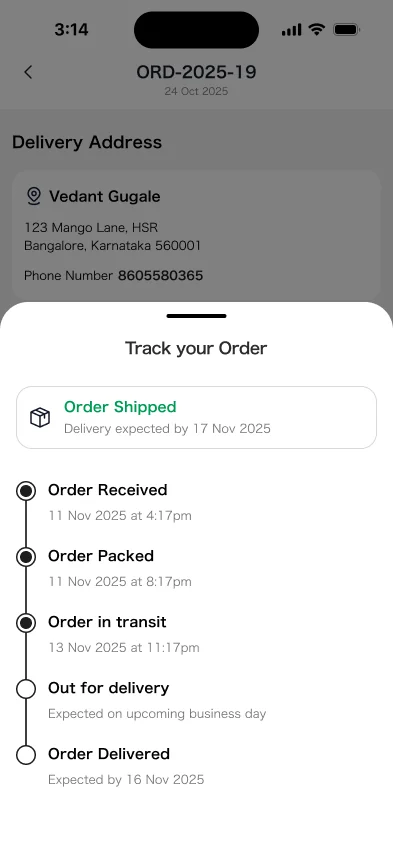
A third of the screens are post-purchase. On purpose.
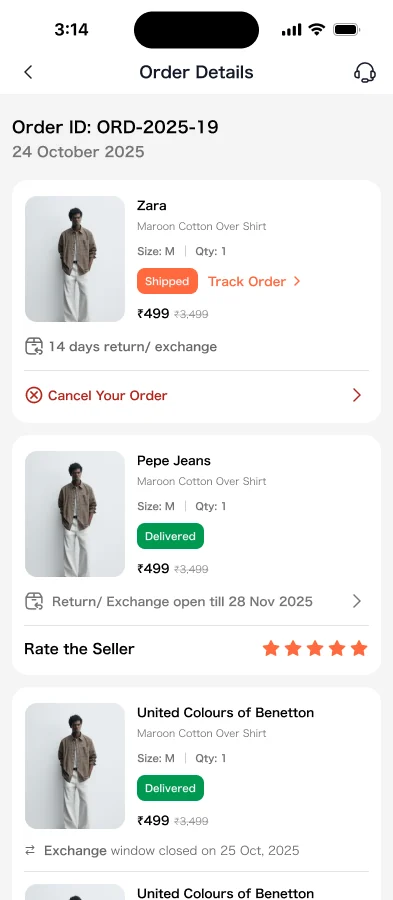
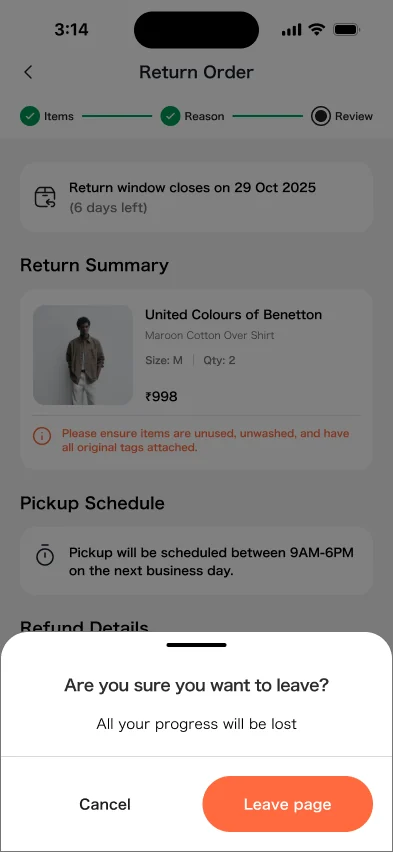
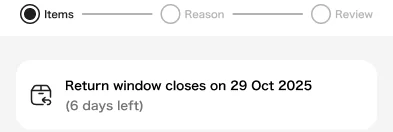
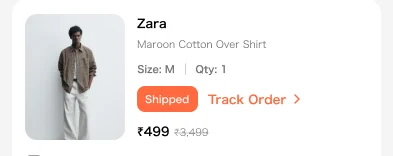
“Will I get my money back?” is answered after the order, so that's where the design time went. Every item on the order shows its window as a date: “Return/Exchange open till 28 Nov 2025”.
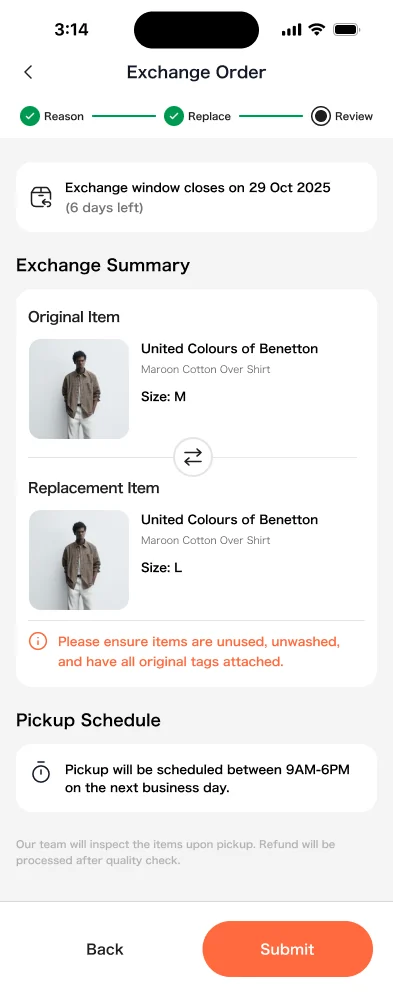
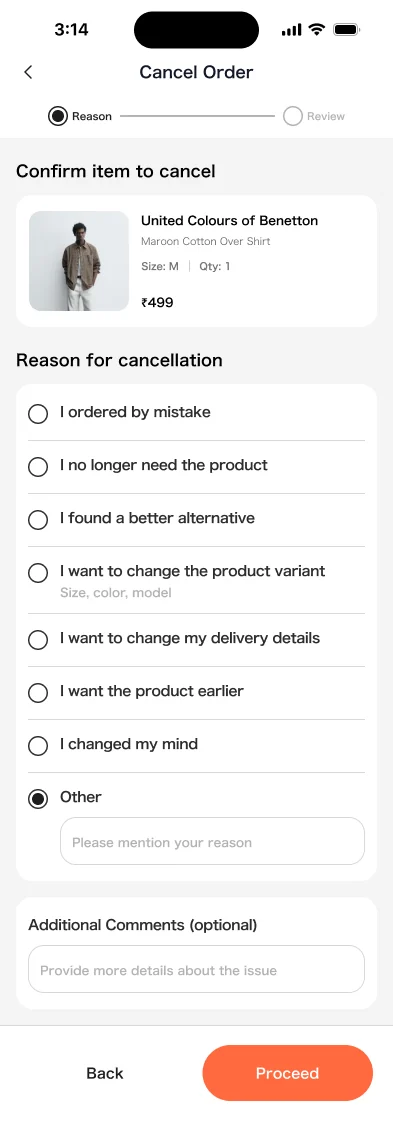
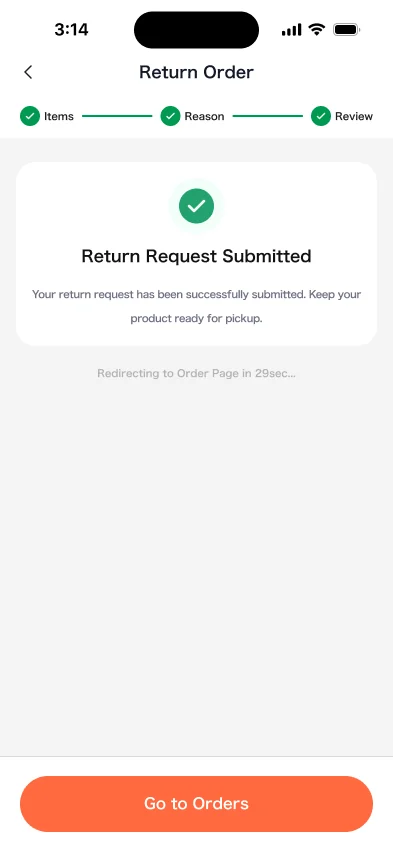
One pattern, three flows. Returns, exchanges and cancellations share a stepper, Items → Reason → Review, with days remaining pinned on top. Reasons are in the customer's words. Review shows pickup slot and refund amount, method and timing before submit.
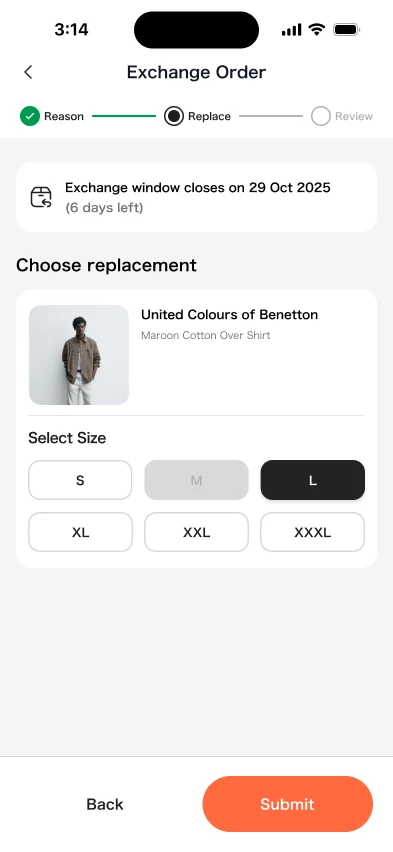
Exchange inline. Pick a replacement size with the same stock-aware chips. If your size is gone, the flow offers the return path instead of a dead end.
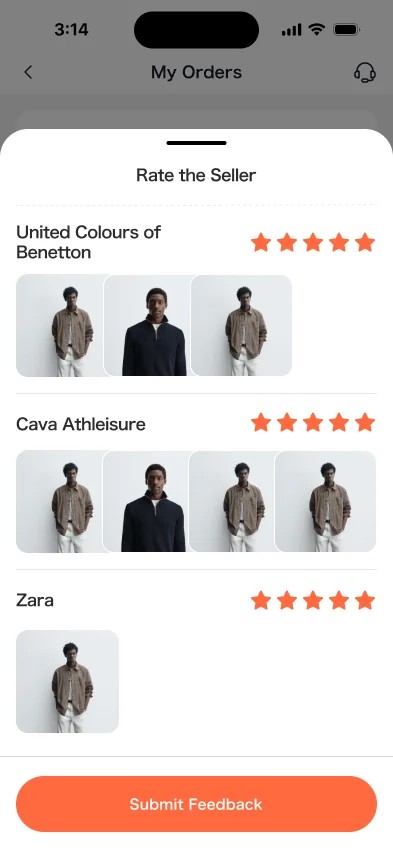
Rating that does a job. Each brand in an order is rated separately, and the answers become the proof counts on every product page.
The system underneath
One accent, one sans, components that mean one thing everywhere.
Colour. Coral marks the primary action, the active tab, the discount chip and the promise. Nothing else. Emerald is money coming back to you. Red is errors and “You missed this”. When the accent has one meaning, three coral elements on a screen means three things worth doing.
Type. One sans, five sizes, two weights. Product names larger than brand names: the garment is what you buy, the brand is why you trust it.
Components. Chips carry sizes, with stock underneath wherever a size appears. Bottom sheets carry every decision that doesn't deserve a page. One stepper for returns, exchanges and cancellations. Coupons are tickets. Status is a colour and a word, never colour alone.
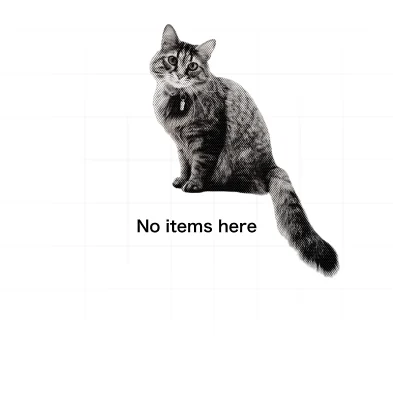
States. Every error names the problem. Every list has an empty state; the wishlist's is a cat. Success screens count down and return you to where you were.
What testing changed
Three rounds, 17 people, six decisions I'd have got wrong.
| Saw | Changed | Where |
|---|---|---|
| 3 of 5 set the wrong shoe size on the wheel picker | Chip grid with inline validation | Onboarding |
| Nobody opened the “Authenticity” tab | Certificate became photo 5/5; “Our Promise” under the trust row | Product page |
| Nobody could guess the header icon | First-run tooltip: “Turn this on to see only products in your size” | Home · Category |
| 4 of 6 asked “can I return this?” in the bag | Return policy badge on each item | Bag |
| Delivery window on the confirmation screen felt like a trick | “7–14 Business Days” moved under the address, above the bill | Bag |
| Hidden sold-outs made the feed feel static | “You missed this” cards kept in the grid; “Deals you missed” in wishlist | Grids · Wishlist |
R1 Sep 2025, 5 people, low-fi · R2 Oct, 6 people, hi-fi · R3 Nov, 6 people, near-final.
Outcomes
First 90 days after the January 2026 launch.
These figures are directional and rounded: reconstructed from what the team tracked at the time, not audited analytics. Benchmarks are cited where they exist.
The two that matter: return rate, which the whole fit strategy was aimed at; and the “not original” flag rate, the only honest measure of whether the authenticity system worked.
What didn't move. Product-to-bag conversion stayed around 12%; delivery speed was the reason people gave. The Women tab under-performed on thin catalogue depth. And the brand proof counts started at zero, which for the first weeks was worse than no count at all.
What I'd do differently
Instrument the belief loop from day one. “Was it original?” became the company's early-warning system for suppliers. It should have been dashboarded before launch, not found in a spreadsheet in week six.
Earn a faster tier. Honesty about 7–14 days worked, but the customer lives in a thirty-minute world. Forward-stock the top 200 styles in one metro and test a two-day tier.
Seed proof before launch. A count that starts at zero is a claim with no evidence. A closed pilot would have given every brand a real number on day one.
Do again. Write the reframe on the wall before drawing a screen. Test the elegant idea first so it can die early. Put the uncomfortable truths in plain sight. Treat what happens after payment as the product.
Sources
- BoF & McKinsey, State of Fashion 2025: excess inventory. 2.5–5 bn items, $70–140 bn.
- Otrium, $120M raise, 400+ brands.
- Retail Dive, Nike clearing inventory; Front Office Sports, $9.7B, +44%. Q1 FY23.
- NPR, H&M $4.3B unsold, 2018.
- PBS / AP, €1.2B of unsold Yeezys, 2023.
- TJX, FY25 results. $56.4B, 5,085 stores.
- Wikipedia, Fashion Factory (ex Brand Factory).
- European Commission, ESPR. Destruction ban for large companies from 19 July 2026.
- Bain, How India Shops Online 2025.
- The Tribune / ANI, Myntra 200M AAU, 50% Gen Z, Dec 2025.
- Medianama, Eternal FY25.
- Business Today, District launch, Nov 2024.
- Snap & BCG, How Gen Z is shaping the new India, 2024.
- Indian Retailer, Nykaa FY25.
- Rest of World, The end of free returns, 2023. 25–40% returned.
- The Week, LocalCircles survey, Jan 2025. 1 in 5 received a fake; 40% refunded.
- Business Standard, Myntra EORS 2×, June 2025.
- Business Standard, H&M, Zara, Uniqlo India FY25; Zara India stores.
- Aditya Birla Group, Peter England.